

Neurology
Recent news:
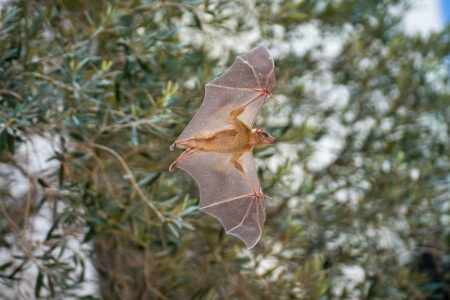
Researchers in Michael Yartsev’s lab, led by postdocs Adam Lowet and Krishna Kasuba, built a digital twin of the bat hippocampus – an AI model trained on large-scale neural activity during natural flight. The model generated new, testable hypotheses about hippocampal organization that were confirmed by real-world data.

ARPA-H’s BIOGAMI program aims to transform our understanding of protein dysfunction in the earliest stages of neurodegenerative disease by developing new approaches to detect and characterize protein misfolding. BioE PhD alumnus Nicolas Fawzi leads the Brown University team on this multicampus effort, led at Berkeley by the Innovative Genomics Institute.

Examining large-scale neural activity from the motor cortex of freely flying Egyptian fruit bats helps Michael Yartsev’s lab understand how the brain supports very complex behaviors, like buttoning a shirt or playing piano.

Congratulations to two postdoctoral scholars in BioE lab who have been named 2026 Jane Coffin Childs Fellows! The charitable fund supports brilliant postdoctoral fellows conducting fundamental research on cancer and human disease. Kevin Aris, PhD, works in Aaron Streets’ lab on tools to measure DNA supercoiling in living cells, to build a genome-wide map of DNA shape. Adam Lowet, PhD. works with Michael Yartsev to explore the computational and biological mechanisms underlying social decision-making in the Egyptian fruit bat.
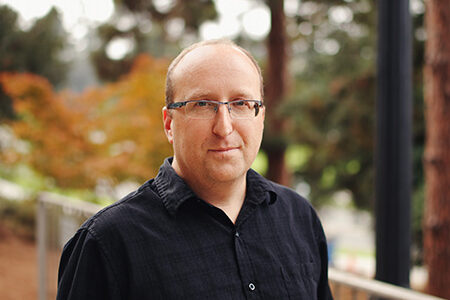
Professor Michael Yartsev has been named to the John Simon Guggenheim Memorial Foundation’s 101st Class of Fellows for his trailblazing work in neuroscience and neuroengineering. One of the country’s most prestigious awards, fellowships are given to innovators in a wide range of disciplines with a monetary stipend allowing them to pursue independent work at the highest level under “the freest possible conditions.”

A research project on “the protein code of brain aging: from molecules to mechanisms,” by Professor Amy Herr has been selected for a Weill Neurohub Investigator Award. The Investigators program funds top faculty to form cross-campus, interdisciplinary teams to explore, create, and test bold new concepts and technologies.
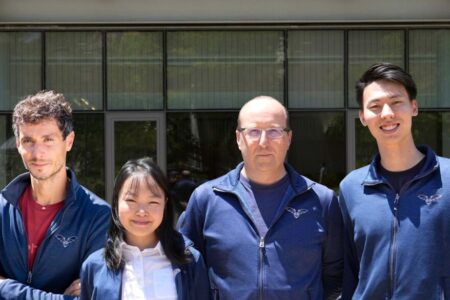
Researchers from Professor Michael Yartsev’s lab used wireless recording devices to track neural activity in Egyptian fruit bats, revealing new clues to how our long-term memories are formed.
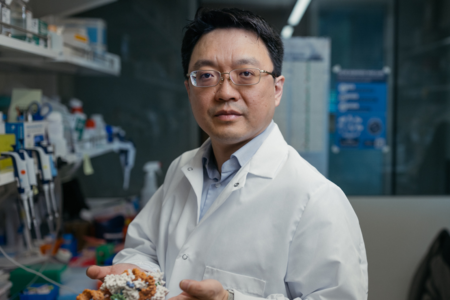
PhD alumnus Stanley Qi, now a professor at Stanford University, is interviewed about his work developing advanced gene-editing tools to treat life-threatening diseases and slow the onset of neurological aging.
Michael Yartsev will receive the 2025 Richard Lounsbery Award from the National Academy of Sciences to recognize his extraordinary scientific achievement in understanding the neural basis of natural behaviors.