

Bioengineering trains students to apply engineering skills and techniques to biology. This major is highly interdisciplinary, and students can expect to study math, physics, chemistry, computer science and biology before delving into specialty areas through a concentration.
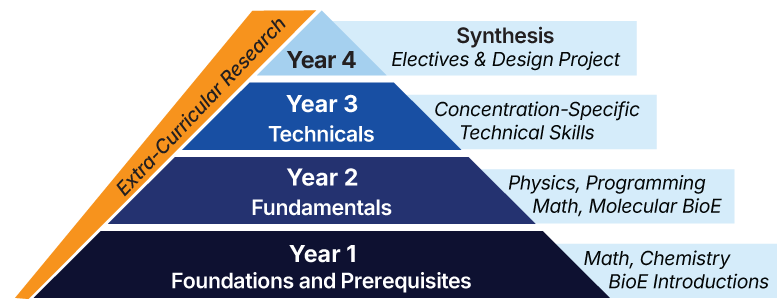
All students begin with foundation and prerequisite courses, then bioengineering fundamentals and technical topics in other departments, before diving deeper into areas such as device design and construction, genomics and proteomics, data science and computation, molecular and cellular biomechanics, biochemistry and/or biomaterials.
Extracurricular research is strongly encouraged and is a common method of fulfilling the design requirement.
Focus on design
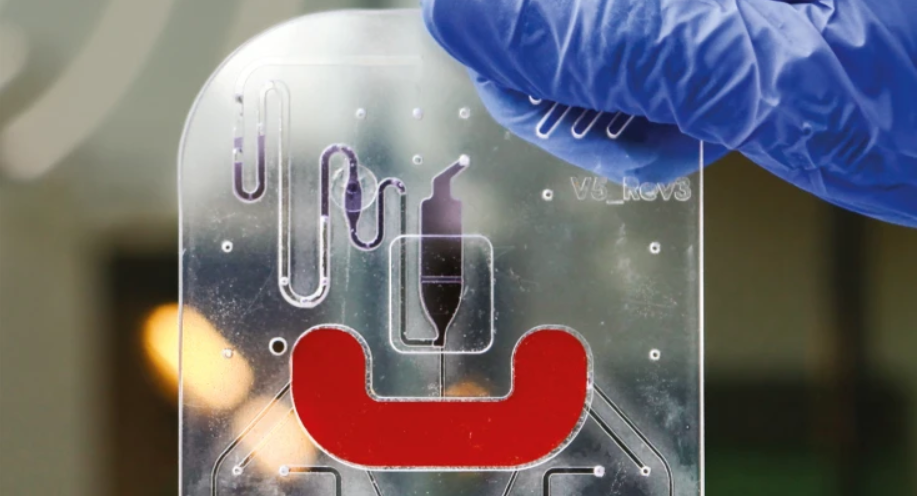 How do discoveries and inventions move from research labs to real-life impact on biology and human health?
Through Bioengineers. We move ideas from scholarship to solution.
To meet this challenge, we use Bioengineering Design – a process that methodically guides us in identifying important and unmet biomedical and environmental needs, and then rigorously guides us as we iteratively develop our creative engineering into effective solutions.
All students must complete a semester of design-focused work, either through a project-based course, extra-curricular research projects, or enrollment in the BioE 192 Senior Capstone Design course.
Learn more about the role of design in bioengineering, the design process, and ways to fulfill the research and design requirement.
Responses from our annual anonymous survey of undergraduates:
What is the BioE Department doing a good job at?
Teaching multidisciplinary thinking, creative problem solving and injecting awareness of the newest technologies in the field.
Providing a variety of upperdiv courses in different areas so students can develop technical skills in what they're interested in. Also, providing lots of opportunities for listening to talks and getting to know faculty.
The BioE department is very nice and receptive to its students. They do a great job listening to us!
Love the excellent and timely communication. I feel well informed about important information and deadlines.
Current Student Profile
434
Current Undergraduates
Student Support
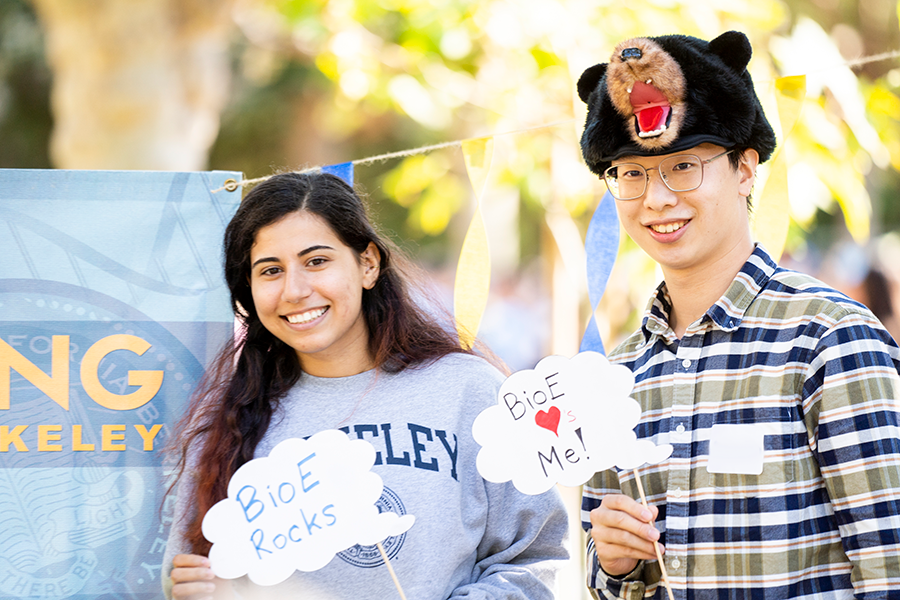
UC Berkeley is a big place, but you're not in it alone. In addition to excellent advisers, BioE students have a robust community and the campus provides a wealth of support resources.
Get involved to thrive!
What do I do with a degree in Bioengineering?
BioE graduates are well positioned for careers in industry, further study in graduate or medical school, or a variety of careers requiring analytical skills, design thinking, and teamwork. Our BioE Bears are everywhere - in the lab, in the C-suites and leadership, in startups and large companies, in the classroom, the clinic, and so much more.
News About: Undergraduates

Student Profile: Esha Ananth
Esha Ananth was selected for the 2026 Bioengineering Chair’s Award, which honors one graduating senior for their outstanding achievements in an area of personal passion, in addition to maintaining the highest academic performance. She graduated in May 2026 from the…

Student Profile: Chimkasinma Mbakwe
Congratulations to Chimkasinma Mbakwe, May 2026 graduate and recipient of the 2026 Bioengineering Service Award! This award recognizes one graduating senior for exceptional achievements and dedication to serving the community, in addition to maintaining high academic performance. An international student…

Berman named finalist for University Medal
Bioengineer Emma Berman is one of four finalists for the 2026 University Medal, Berkeley’s highest honor for a graduating senior who has achieved academic excellence while making a positive impact on others.
Congratulations 15 NSF Fellows!
We are very proud to announce that fifteen Berkeley Bioengineers are receiving NSF Graduate Research Fellowships this year – one of the most competitive and prestigious awards for early-career PhD students. Congratulations to graduating seniors Esha Ananth, Emilie Petit and…
Student Profile: Emma Berman
Graduating senior Emma Berman lives at the intersection of engineering, medicine and community.

Student Profile: Saket Budhia
A senior double majoring in bioengineering and electrical engineering & computer science, Saket Budhia embraces the variety of bioengineering at Berkeley.
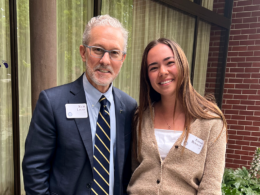
Berman wins Strauss Scholarship
BioE junior Emma Berman has been awarded the Strauss Scholarship, an honor which supports a current Berkeley student pursue a self-initiated public service project. Emma is leading a student-driven community initiative to destigmatize the current social narrative surrounding hearing loss to create a new image for wearable hearing technology. Congratulations!
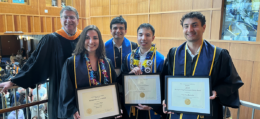
Congratulations 2024 undergraduate award winners
Congratulations to our 2024 undergraduate award winners: Elena Maria Mujica, Departmental Citation, Cyrus Tau, Chair’s Award in Bioengineering, and Sarp Dora Kurtoglu, Bioengineering Service Award. Special honorable mentions under the Chair’s Award go to Justin Garlepp and Derrick Ma. Outstanding…
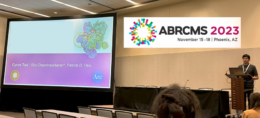
Undergrad Tau presents at ABRCMS
Undergraduate researcher Cyrus Tau was selected to present, and won the Best Talk award, in the Biochemistry/Molecular Biology oral presentation section at this year’s Annual Biomedical Research Conference for Minoritized Scientists – ABRCMS 2023.
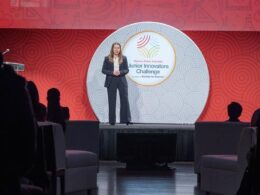
Allison Nguyen keynotes Junior Innovator’s Challenge awards ceremony
Recent alumna Allison Nguyen (BS 2022) gave the keynote address at Thermo Fisher Scientific’s inaugural Junior Innovator’s Challenge awards ceremony in Washington, D.C this fall. Allison was a Bioengineering Scholar, a co-founder of the BioE Mentorship Program, and is now employed in the Product Engineering Leadership Development Program at Thermo Fisher.