

Recent Faculty News
Core Faculty
J. Christopher Anderson
Associate Professor
Adam Arkin
Newton Memorial Professor
Iain Clark
Assistant Professor
Steve Conolly
Cook Professor
Derfogail Delcassian
Assistant Professor
John Dueber
Lloyd Distinguished Professor
Daniel A. Fletcher
Purnendu Chatterjee Professor
Leah Guthrie
Assistant Professor
Teresa Head-Gordon
Chancellor's Professor
Kevin Healy
Fandrianto Professor
Amy E. Herr
MacArthur Professor
Ian Holmes
Dehmel Professor
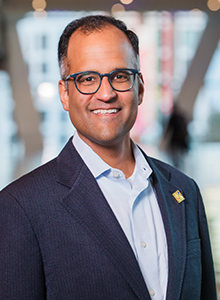
Sanjay Kumar
Pardee Professor
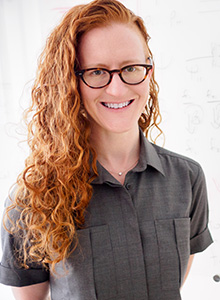
Liana Lareau
Guertin Associate Professor
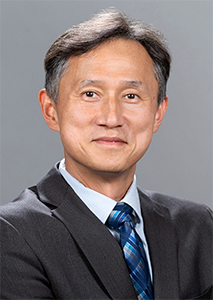
Seung-Wuk Lee
Professor

Dorian Liepmann
Professor
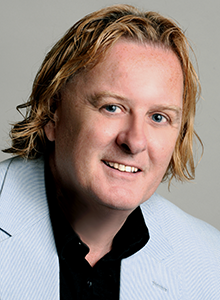
Gerard Marriott
Professor
Phillip Messersmith
Class of 1941 WWII Memorial Professor and Chair
Mohammad Reza Kaazempur Mofrad
Professor
Niren Murthy
Professor
Aaron Streets
Lloyd Associate Professor
Moriel Vandsburger
Professor
Michael Yartsev
Associate Professor
Joint Faculty
Christopher Hernandez
Professor in Residence
Jay Keasling
Professor
Tony Keaveny
Chancellor's Professor
Lisa Pruitt
Professor
S. Shankar Sastry
Thomas Siebel Professor
David Schaffer
Professor
Emeritus Faculty
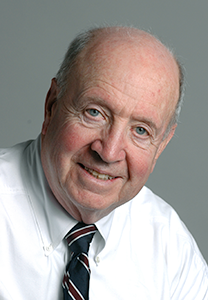
Thomas Budinger
Professor Emeritus
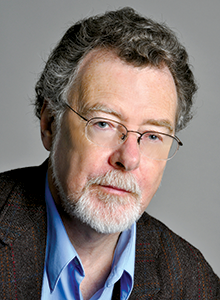
James Casey
Professor Emeritus
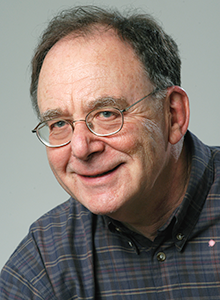
Richard Karp
Professor Emeritus
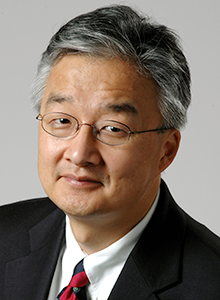
Luke Lee
Professor Emeritus
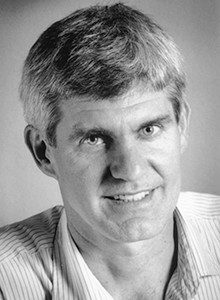
David Rempel
Professor Emeritus
Kimmen Sjölander
Professor Emeritus
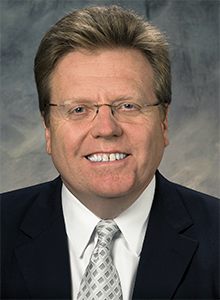
Matthew Tirrell
Professor Emeritus
Adjunct & Affiliated Faculty
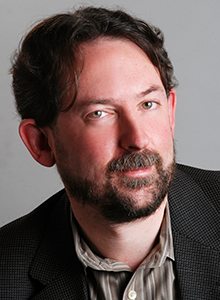
Paul Adams
Adjunct Professor
Steven Brenner
Affiliated Faculty
Syed Hossainy
Adjunct Professor
David Kirn
Adjunct Professor
Taner Sen
Adjunct Professor
Lecturers
News About: Faculty
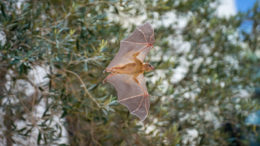
Digital Bat Twins – NeuroAI generates testable hypotheses about higher-level cognitive function
Researchers in Michael Yartsev’s lab, led by postdocs Adam Lowet and Krishna Kasuba, built a digital twin of the bat hippocampus – an AI model trained on large-scale neural activity during natural flight. The model generated new, testable hypotheses about hippocampal organization that were confirmed by real-world data.

From bat flight to the most complex human movements
Examining large-scale neural activity from the motor cortex of freely flying Egyptian fruit bats helps Michael Yartsev’s lab understand how the brain supports very complex behaviors, like buttoning a shirt or playing piano.

Solving a longstanding problem in drug delivery
Lipid nanoparticles are great delivery vehicles for mRNA treatments, but their positive charge triggers high levels of inflammation. Now researchers led by Professor Niren Murthy have engineered a new lipid nanoparticle that can switch its charge from positive to negative and may avoid triggering inflammation while still able to deliver mRNA and other nucleic acids.

In Memoriam: Prof. David Rempel
It is with great sadness that we recognize the passing of Dr. David Rempel, MD, MPH, CPE. A versatile expert in occupational health and long-time member of the Bioengineering Graduate Program, he was a Professor Emeritus of Medicine at UCSF and Bioengineering Berkeley. He will be missed.

How One Simple Change Can Make Lipid Nanoparticles Safer for Gene Editing and Other Applications
In a new paper out in Nature Nanotechnology, researchers in Niren Murthy’s lab show that there is a simple way to remove the toxicity of lipid nanoparticles while maintaining their ability to effectively deliver therapies to specific cells in the body.
Herr Lab and partners receive grant to study biology in time and space
Our researchers have received a new grant from the Biohub non-profit research organization, looking to advance the field of Spatiotemporal omics – the ability to sample biomolecules at different locations and times to watch disease processes unfold. Amy Herr and her UCSF partners Jennifer Rosenbluth and Amrita Basu will be studying integrated organoid systems for immunotherapy toxicity.
Yartsev named Guggenheim Fellow
Professor Michael Yartsev has been named to the John Simon Guggenheim Memorial Foundation’s 101st Class of Fellows for his trailblazing work in neuroscience and neuroengineering. One of the country’s most prestigious awards, fellowships are given to innovators in a wide range of disciplines with a monetary stipend allowing them to pursue independent work at the highest level under “the freest possible conditions.”

Growing immune cells with more targeted cancer-fighting abilities
Recent research from Professor Derfogail Delcassian’s lab explores how the stiffness of swollen lymph nodes increases the strength, but decreases the precision, of cancer-killing immune cells.

How Do Stickers Stick?
Professor Phil Messersmith explained all about adhesives on the family science podcast, Brains On!
Herr wins Weill Neurohub Investigator Award
A research project on “the protein code of brain aging: from molecules to mechanisms,” by Professor Amy Herr has been selected for a Weill Neurohub Investigator Award. The Investigators program funds top faculty to form cross-campus, interdisciplinary teams to explore, create, and test bold new concepts and technologies.