

Regenerative Medicine
Recent news:

Professor Phil Messersmith and colleagues have launched HypO2Regen Therapeutics, a startup developing novel, disease-modifying therapeutics for chronic intractable inflammatory diseases, including the first cell-free stem cell treatment that induces true regeneration of damaged tissue. Their first effort takes aim at periodontitis, which affects over 300 million people worldwide.
MuscleMatrix and their hydrogel scaffold for muscle loss injuries is part of LSEC’s 2nd cohort of Venture Grant startups.

Professor Irina Conboy and former student Alina Su have founded a new company, Generation Lab, offering an at-home molecular aging test that analyzes a person’s biological age by assessing “biological noise” in their system. The test evaluates an individual’s risk for top health conditions and the pace of aging across 19 systems in the body, which can help physicians see where interventions may be most needed and effective.

Researchers in Professor Phillip Messersmith’s lab have demonstrated that treatment with DPCA, an enzyme inhibitor molecule shown to trigger regeneration in mammals, can protect against and repair colon damage in a mouse model of colitis. This work suggests that short-term use of this small molecule drug could someday provide a restorative therapy for patients with IBD — and a path to remission.
Professor Irina and Mike Conboy were guests on the Economist “Babbage” science and technology podcast dicussing progress in research on aging.

Research from Professor Irina Conboy’s lab is on the cover of the journal “Aging” this week, highlighting their exciting new research in the measurement of biological age. Their work shows that commonly-used Elastic Net DNA methylation clocks have low accuracy, and present an alternative using noise-detecting cytosines, measuring the pressure of aging and disease on an organism. BioE PhD student Xiaoyue Mei and undergraduate alumnus Joshua Blanchard are first authors.
New work from Irina Conboy’s lab extends to humans their previous animal studies on age-specific differences in blood plasma, and establishes a novel direct measurement of biological age. Their results continue to demonstrate that aging may be driven by an excess of certain molecules and proteins, and point to potential treatments for age-related conditions.
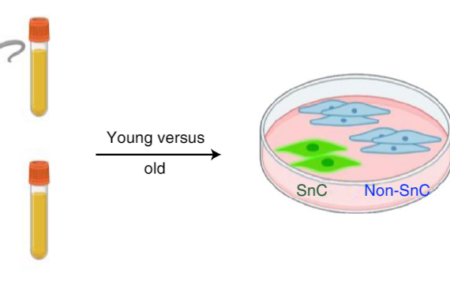
New research from the Conboy Lab, highlighted in New Scientist magazine, has demonstrated that transfusing young mice with blood from older rodents quickly triggers ageing in the young, suggesting that cellular ageing isn’t just a case of wear and tear. This is one step closer to potential anti-ageing treatments and builds on years of aging research from Professor Irina Conboy.
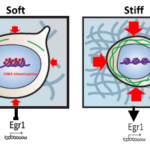
Engineered biomaterials are increasingly used to expand and differentiate stem cells for technological and therapeutic applications. A major open question in the field is how the mechanical properties of material scaffolds regulate stem cell differentiation, especially in complex 3D geometries like those found in tissue. In a collaborative study published in Science Advances, the labs of Sanjay Kumar and David Schaffer have discovered a 3D-specific molecular mechanism through which mechanical inputs act through the transcription factor Egr1 to determine how efficiently neural stem cells turn into neurons.