

Bioinstrumentation
Recent news:

Congratulations to PhD student Maya Overton of Herr Lab, winner of Best Poster at the Single Cell Proteomics Conference (SCP2026)!

Congratulations to two postdoctoral scholars in BioE lab who have been named 2026 Jane Coffin Childs Fellows! The charitable fund supports brilliant postdoctoral fellows conducting fundamental research on cancer and human disease. Kevin Aris, PhD, works in Aaron Streets’ lab on tools to measure DNA supercoiling in living cells, to build a genome-wide map of DNA shape. Adam Lowet, PhD. works with Michael Yartsev to explore the computational and biological mechanisms underlying social decision-making in the Egyptian fruit bat.

Our researchers have received a new grant from the Biohub non-profit research organization, looking to advance the field of Spatiotemporal omics – the ability to sample biomolecules at different locations and times to watch disease processes unfold. Amy Herr and her UCSF partners Jennifer Rosenbluth and Amrita Basu will be studying integrated organoid systems for immunotherapy toxicity.

Soon-to-be Doctor Alonso Torres, Jr. knows the value of community. His life has taken him from the Central Valley, through military service and parenthood, now to a PhD in bioengineering.
A research project on “the protein code of brain aging: from molecules to mechanisms,” by Professor Amy Herr has been selected for a Weill Neurohub Investigator Award. The Investigators program funds top faculty to form cross-campus, interdisciplinary teams to explore, create, and test bold new concepts and technologies.

A team led by Professors Kevin Healy and Niren Murthy have developed a microfluidic heart-on-a-chip, with which they were able to discover a lipid nanoparticle that could penetrate the dense heart muscle and efficiently deliver its cargo of therapeutic mRNA into heart muscle cells. This new drug delivery method and testing platform may pave the way to new cardiac treatments.
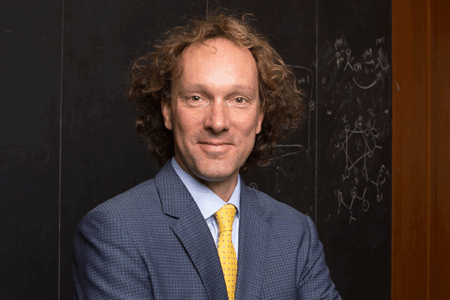
Professor Dan Fletcher has been elected to the National Academy of Medicine for his contributions to the mechanistic understanding of biological self-assembly and mechanotransduction, and his work developing mobile phone-based microscopy for remote diagnosis of infectious diseases. Election to the academy is considered one of the highest honors in the fields of health and medicine.
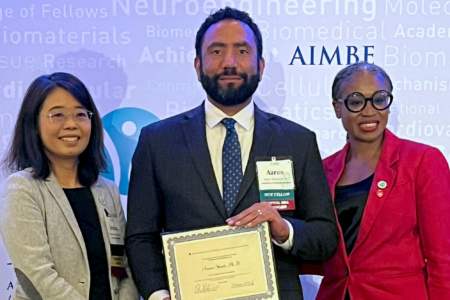
Professor Aaron Streets has been named to the College of Fellows of the American Institute for Medical and Biological Engineering (AIMBE). Streets was selected for “developing innovative technology to elucidate genome regulation with single-cell and molecule resolution, and for impactful leadership to diversify bioengineering.
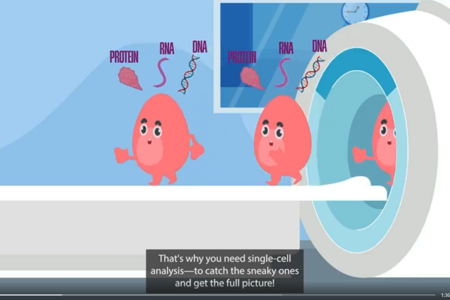
BioE postdoc Trinh Lam’s animated video explains how Herr Lab’s BlotSeq single-cell tool uses sequencing data to guide protein selection without the need to predefine targets, making the process more flexible.