

Posts Tagged ‘faculty’
Iain Clark selected as Innovation Investigator by Arc Institute

Professor Iain Clark was named an Innovation Investigator by the Arc Institute, a scientific research organization pioneering new models for scientific discovery and translation. As a member of the inaugural Innovation Investigators program, Clark will receive $1 million over five years to pursue “curiosity-driven, ambitious research.”
Read MoreConboy Lab changes the measurement of biological age
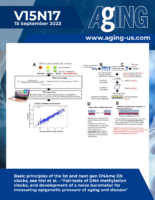
Research from Professor Irina Conboy’s lab is on the cover of the journal “Aging” this week, highlighting their exciting new research in the measurement of biological age. Their work shows that commonly-used Elastic Net DNA methylation clocks have low accuracy, and present an alternative using noise-detecting cytosines, measuring the pressure of aging and disease on an organism. BioE PhD student Xiaoyue Mei and undergraduate alumnus Joshua Blanchard are first authors.
Read MoreMessersmith receives 2023 Bakar Fellows Spark Award
Congratulations to Professor Phillip Messersmith, a recipient of the 2023 Bakar Fellows Spark Award for his work on gel protection during tumor ablation. The award is designed to accelerate faculty-led research and produce tangible, positive societal impact through commercialization.
Read MoreBat study reveals how the brain is wired for collective behavior
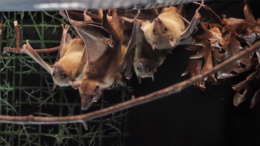
New research from Professor Michael Yartsev shows that the same neurons that help bats navigate through space may also help them navigate collective social environments. In a study published today in the journal Nature, the researchers found that the portion of the brain that acts as a GPS is also tuned to the social dynamic in the environment.
Read MoreNew Technique Could Facilitate Rapid Cryopreservation of All Coral Species
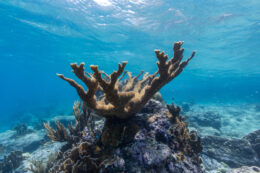
Research by Professor Emeritus Boris Rubinsky, in collaboration with Smithsonian’s National Zoo and Conservation Biology Institute (NZCBI) and Texas A&M, has achieved a breakthrough in the fight to save the world’s coral reefs from climate change annihilation. The researchers successfully cryopreserved and revived entire coral fragments, opening the door to collecting and preserving coral fragments easily and rapidly at an urgent moment for coral worldwide.
Read MoreProf. Delcassian named to Women in Enterprising Science Program
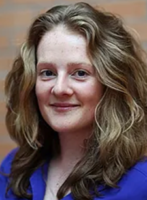
Professor Derfogail Delcassian is one of four entrepreneurs selected for the 2023 cohort of the HS Chau Women in Enterprising Science (WIES) Program by the Innovative Genomics Institute. WIES is a unique program designed to promote gender equity in bio-entrepreneurship by helping innovative genome researchers develop their ideas into new commercial ventures. In her work, Delcassian will examine the role of macrophages in the immune response to cancer.
Read MoreWelcome Professor Leah Guthrie

We are pleased to announce that Dr. Leah Guthrie will be joining the faculty of UC Berkeley Bioengineering starting January 1, 2024! Dr. Guthrie received a BA in Biology from Swarthmore College and a PhD in Biomedical Sciences from Albert Einstein College of Medicine. She is currently a HHMI Hanna Gray postdoctoral fellow at Stanford…
Read MoreHow does the universe work? Promoting diversity can help answer that.

Professor Aaron Streets talks about why it’s important for those who conduct that research “to represent the full diversity of human genetic variation.”
Read MoreFletcher receives graduate student mentoring award

Professor Dan Fletcher has received the 2023 the Carol D. Soc Distinguished Graduate Student Mentoring Award, a highly competitive campuswide award that recognizes faculty for outstanding mentorship of graduate students at UC Berkeley. Fletcher was nominated by his current and former graduate students and has long been a sought-after mentor of students and faculty of all levels.
Read More