

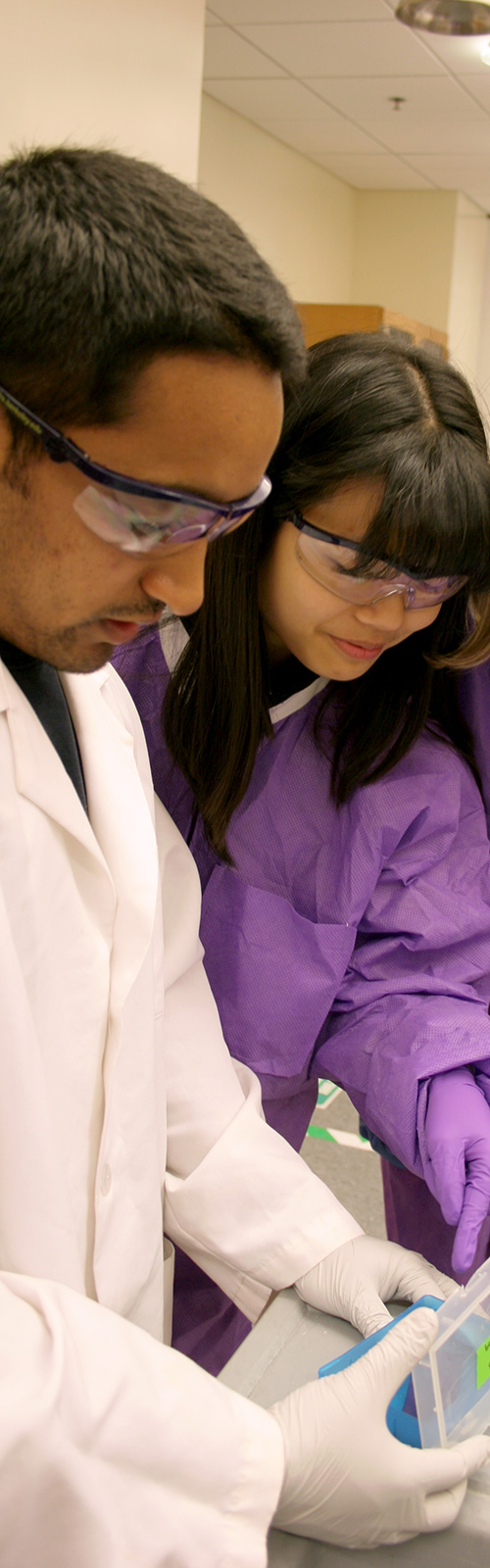
 Ready to show your research to the world?
Apply for the Dr. Thomas Budinger Bioengineering Exploration Award!
Created to honor our first department chair and innovative researcher Dr. Thomas Budinger, this award encourages BioE undergraduates to travel to conferences to present their research.
Successful applicants receive up to $1000 in reimbursement for travel to present at a scientific or academic conference. The number of awards per academic year will vary with funding availability. Applications accepted in Fall and Spring.
Eligibility & Details
- Undergraduate UC Berkeley bioengineering major
- Has completed at least one semester at Berkeley.
- Travel and presentation must be completed during their time as a UC Berkeley Bioengineering undergraduate student.
- Application and decision must be completed before the conference - no retroactive awards will be granted.
- Reimbursements must follow campus procedures, receipts are required. No cash awards.
Selection & Priority
Because we have a limited number of awards to grant each year, the selection committee will apply the following rubric:
- Seniority: Priority is given to Juniors and Seniors who have limited time remaining to present their work as Berkeley undergraduates.
- Timeline: Awards are granted for conferences occurring within the current application cycle (spring/summer, fall/winter). Applications for future cycles will be reviewed once that cycle opens.
Timeline - start early!!
- Apply to present at the conference
- You may apply for the award before you know if your presentation was accepted. If so, your award may be contingent on acceptance.
- Apply for the award before paying for conference registration or travel
- Allow two working weeks for award decision
- If accepted you will be notified of award, budget, and payment mechanisms
- Register for the conference, book travel, etc, following all instructions. (Some bills may need to be paid directly by the department rather than reimbursed.) If you will not be able to pay out of pocket for the expenses and be reimbursed after the conference, let us know.
Funding note:
Cost will probably exceed the $1000 award with travel, housing, food, and registration. We strongly suggest that your faculty research mentor should be willing to cover expenses over $1000 as you will be representing their laboratory. As part of the application process you are asked to provide a plan for covering additional expenses, hopefully through a commitment from your mentor. We also suggest room sharing with other attendees and other cost-saving measures.
Application process - the online application form requires:
-
- The abstract/summary you are submitting to the conference with all contributing authors
- Conference acceptance notification, if received
- Conference details (name, date, location)
- Letter of support/recommendation from faculty mentor, with commitment to fund expenses over $1000 if possible
- Proposed budget, with additional funding plan
- The research must be fully attributed and approved for presentation by the principal investigator.
Apply NOW for Spring 2026 - for conferences in Spring/Summer 2026
Fall 2026 applications will open in August 2026 - for conferences in Fall/Winter 2026
About Dr. Budinger
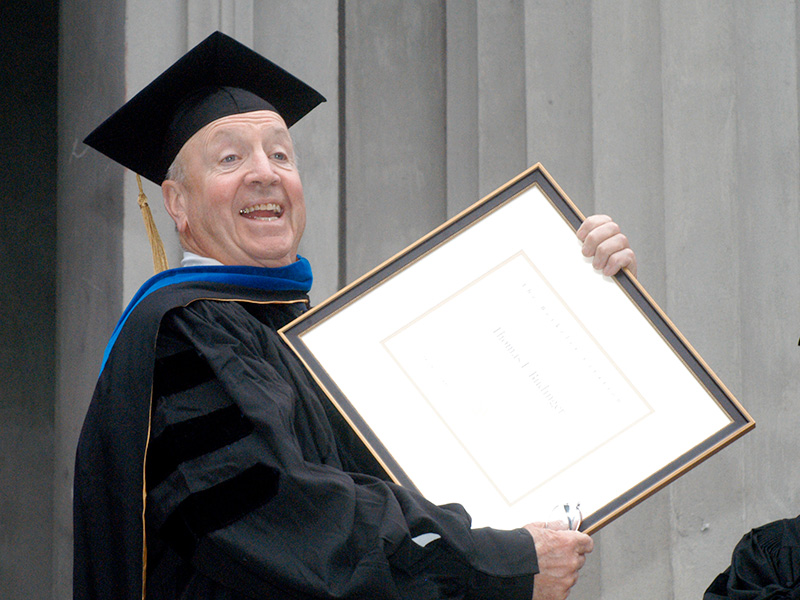
Dr Thomas Budinger, MD/PhD, served as the first and founding Chair of the Department of Bioengineering, from 1998 to 2004. A pioneer in the field of medical imaging, "Dr. B" has lived an adventurous life characterized by fearless experimentalism and and insatiable curiosity.
Now a Professor Emeritus in Bioengineering and Electrical Engineering & Computer Science at Berkeley, and Medicine at UCSF, he is a member of the National Academies of Engineering and Medicine. He received his BS in chemistry at Regis College magna cum laude (1954); MS in physical oceanography from the University of Washington, Seattle (1957); MD from the University of Colorado, Denver, with the Gold-Headed Cane Award for promise as an outstanding physician (1964); and PhD in medical physics from UC Berkeley (1971).
Dr. Budinger was a member of the NASA space program and served in the US Coast Guard, with active duty in the Arctic and Antarctic, and as science officer for the International Ice Patrol from 1957 to 1960.
His science and engineering contributions include the text Ethics of Emerging Technologies: Scientific Facts and Challenges (with Miriam Budinger; Wiley, 2006), hundreds of papers and abstracts, and 10 patents in the areas of oceanography, space radiation, nuclear medicine, and medical imaging innovations.
We commend Dr. B to all of our students as an example of bold exploration across disciplinary boundaries.