

Computational Biology
Recent news:
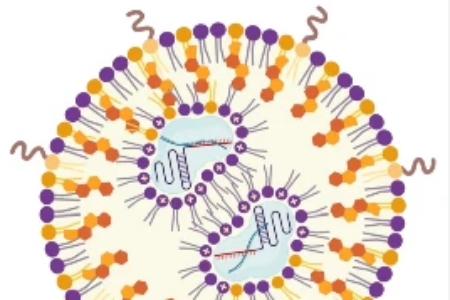
Niren Murthy et al. have developed a more stable version of the Cas9 enzyme to improve delivery of CRISPR-Cas9 ribonucleoproteins (RNPs) for in vivo gene editing.

Professor Leah Guthrie works to understand how the microbiome metabolites and proteins communicate with our human cells to influence our physiology and pathophysiology. Learn more about Guthrie in this interview with QB3.
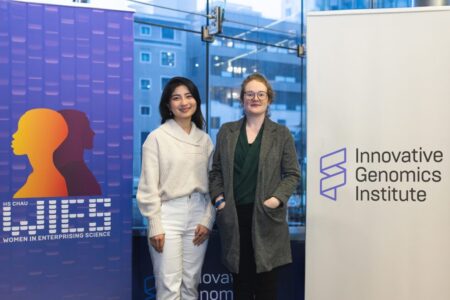
Professor Derfogail Delcassian has been awarded $1 million in non-dilutive seed funding to accelerate the commercialization of her work on targeted molecular therapies for hard-to-treat cancers.
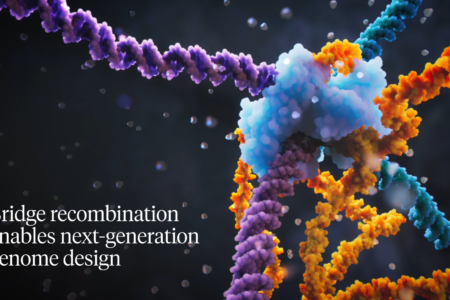
A team of researchers led by Professor Patrick Hsu has discovered the first DNA recombinase that is programmable, allowing the user to specify any desired genomic target sequence and any donor DNA molecule to be inserted. The bridge recombinase mechanism promises to expand genome editing beyond CRISPR and RNA interference (RNAi) to offer a unified mechanism for programmable DNA rearrangements. Bioengineering graduate student Nicholas Perry is also a lead author of the study, along with other researchers from the Arc Institute.
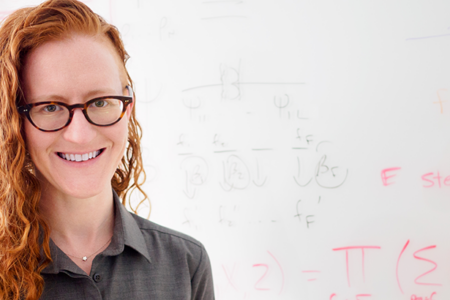
Congratulations to Professor Liana Lareau, winner of a 2024 Spark Award from the Bakar Fellows Program.
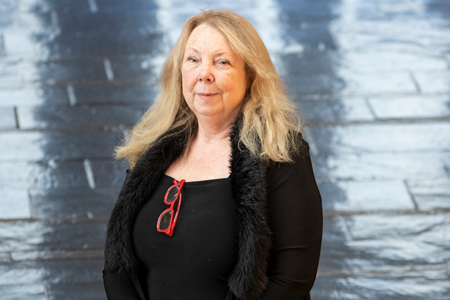
Congratulations to Professor Teresa Head-Gordon, who has been honored with a prestigious research award from the Humboldt Foundation, known for fostering collaboration with German scientists.
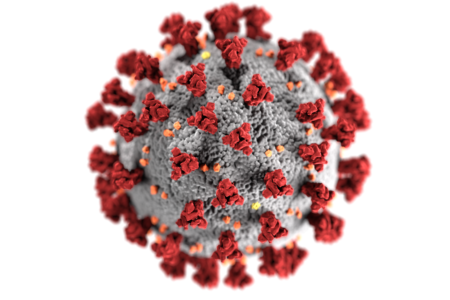
A study led by Prof Patrick Hsu has identified specific proteins within our bodies that can promote or protect us from SARS-CoV-2 infections, potentially opening the door to new antiviral therapies. Notably, they showed that mucins — the main component of mucus found in the lungs — seem to help block the SARS-CoV-2 virus from entering cells.

Professor Teresa Head-Gordon will continue the machine learning COVID-19 research spurred by a 2020 Digital Transformation Institute grant, with the Midwest Antiviral Drug Discovery Center for Pathogens of Pandemic Concern, one of nine new centers announced by the National Institute of Allergy and Infectious Diseases on May 18, 2022.
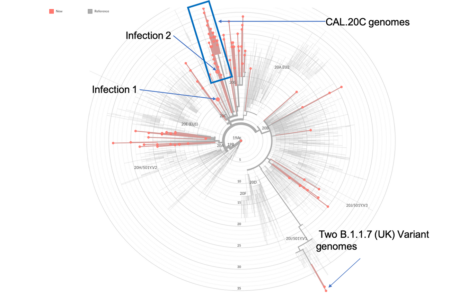
Professor Liana Lareau has been co-leading the Innovative Genomics Institute effort to monitor mutations in the SARS-CoV-2 virus in the local community. The team’s rapid sequencing turnaround is crucial for tracking the spread of new variants, including the more infectious B.1.1.7 recently detected in two cases at Berkeley.
- « Previous
- 1
- 2
- 3
- 4
- Next »