

Impact Area: the Environment
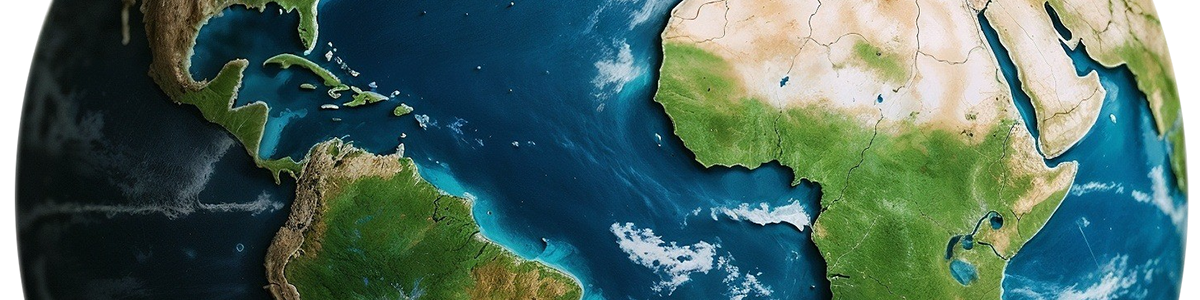
Bioengineering is ideally placed to address environmental problems in our warming world. Our faculty and students are always looking for ways to apply their research to solving challenges in climate change, agriculture, environmental remediation, green manufacturing, and more.
News About: Environmental Impact
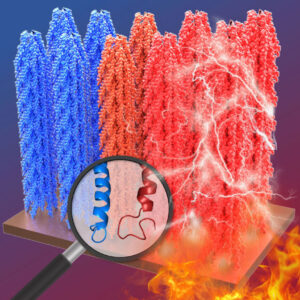
Viral Pyroelectricity with Seung-Wuk Lee
Professor Seung-Wuk Lee discusses pyroelectricity: the finding that viruses can generate electricity when exposed to heat, and how this may pave the way for next-generation biosensors and diagnostic tools.
Bakar ClimatEnginuity Hub: Berkeley’s new home for climate innovation
Professor David Schaffer will lead the new Bakar ClimatEnginuity Hub, an incubator that will provide resources and support to entrepreneurs in renewable energy and clean technology.
Berkeley’s ecosystem of innovation, entrepreneurship combats climate change
Professors John Dueber and David Schaffer are featured in this article highlighting campus research and entrepreneurship in sustainability.
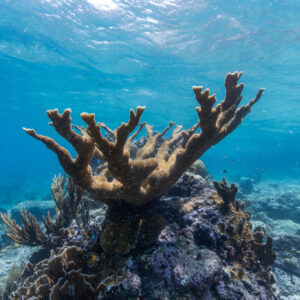
Rubinsky’s coral preservation work featured on PBS News
Professor Emeritus Boris Rubinsky’s isochoric vitrification method of preserving coral samples in suspended animation is part of recent emergency efforts to save dying coral reefs. The method is being used by the Smithsonian’s National Zoo and Conservation Biology Institute.
Herr Lab receives grant to study marine symbiosis in a warming world
The Herr Lab has been awarded a 3-year ‘Symbiosis’ grant from the Gordon & Betty Moore Foundation, geared towards designing and disseminating microfluidic tools to power new understanding of marine symbiotic systems – like coral reefs – adversely impacted by rising sea temperatures and other climate-associated stresses. Herr’s lab welcomes two new postdoctoral scholars, Drs. Fangchen Liu and Cyril Deroy, and is collaborating with experts in coral systems from the Carnegie Institution for Science (Prof. Phillip Cleves) and the University of Miami (Prof. Nikki Traylor-Knowles).
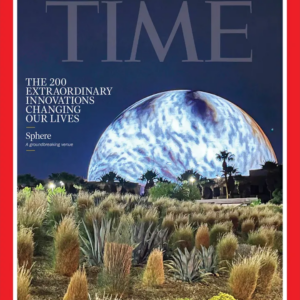
Two alumni innovations named to Time 2023 Best Inventions
Two PhD alumni have innovations named to the Time Magazine 200 Best Inventions of 2023 list. The Cala kIQ, developed by Cala Health, founded by alumna Kate Rosenbluth, is a wearable device that assists patients with Essential Tremor and Parkinson’s. Proven 40 OS is a fertilizer using naturally occurring microbes to reduce emissions and pollution while producing higher crop yields – developed by Pivot Bio, founded by alumnus Karsten Temme.
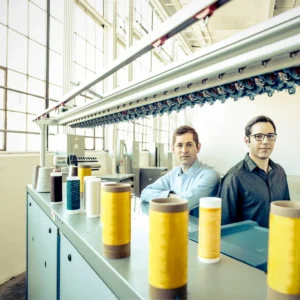
Bolt Threads going public
Bolt Threads, a company co-founded by BioE PhD alumnus David Breslauer, plans to go public in a SPAC deal that values the one-time unicorn at $250 million. Bolt Threads uses synthetic biology and other techniques to sustainably produce engineered biomaterials, including synthetic spider silk and mushroom-based faux leather.

Researchers demonstrate heat-induced pyroelectricity in viruses
Researchers in Professor Seung-Wuk Lee’s lab discovered for the first time “heat-induced electrical potential generation on a virus,” a phenomenon known as pyroelectricity. This work may shed light on how biomaterials — cells, tissues and proteins — generate electricity at a molecular level as well as lead to the development of biomaterials with novel medical, pharmaceutical, environmental and energy applications.
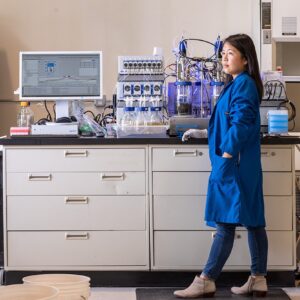
BioE alumna creating a greener future for bluejeans
PhD alumna Tammy Hsu is using synthetic biology to produce environmentally friendly dyes for industry through her company, Huue.
New Technique Could Facilitate Rapid Cryopreservation of All Coral Species
Research by Professor Emeritus Boris Rubinsky, in collaboration with Smithsonian’s National Zoo and Conservation Biology Institute (NZCBI) and Texas A&M, has achieved a breakthrough in the fight to save the world’s coral reefs from climate change annihilation. The researchers successfully cryopreserved and revived entire coral fragments, opening the door to collecting and preserving coral fragments easily and rapidly at an urgent moment for coral worldwide.
- « Previous
- 1
- 2
- 3
- 4
- Next »