

Impact Area: the Environment
Bioengineering is ideally placed to address environmental problems in our warming world. Our faculty and students are always looking for ways to apply their research to solving challenges in climate change, agriculture, environmental remediation, green manufacturing, and more.
News About: Environmental Impact

Bioengineer Andy Yau takes first place in Collider Cup!
BioE MEng student Andy Yau and his teammates in the AltMeat: Product Design of Plant-Based Foods course took first place at Sutardja Center for Entrepreneurship & Technology’s (SCET) Collider Cup XII, its competitive venture showcase for promising student venture projects. The Uncracked team designed a plant-based crab alternative that is more tasty and nutritious than current alternatives, low in sodium and high in protein and omega-3 fatty acids.

Finding solutions for living on Mars — and a rapidly changing Earth
Prof Adam Arkin and the Center for the Utilization of Biological Engineering in Space are leading efforts to create zero-waste biomanufacturing systems in “Mars-like conditions”, for human futures on other worlds and our own.
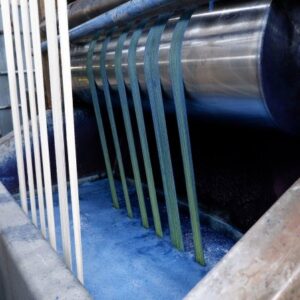
Huue Closes a $14.6 Million Series A to Disrupt Denim Dyeing
Synthetic biology startup Huue, founded by BioE PhD alumni Tammy Hsu, has raised $14.6 million in a Series A funding round for what it says is the world’s first clean and scalable indigo dye for denim.

Bacteria for Blastoff: Using Microbes to Make Supercharged New Rocket Fuel
New research led by Professor Jay Keasling took inspiration from an extraordinary antifungal molecule made by Streptomyces bacteria to develop a totally new type of fuel that has projected energy density greater than the most advanced heavy-duty fuels used today, including the rocket fuels used by NASA.
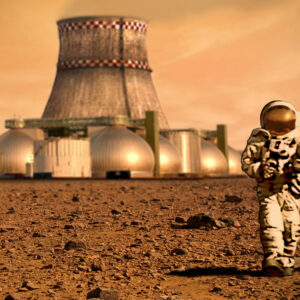
Solar beats nuclear at many potential settlement sites on Mars
Research by BioE PhD student Aaron Berliner and Prof Adam Arkin shows that photovoltaics could provide all the power needed for an extended mission to Mars, or even a permanent settlement there. The authors are members of the Center for the Utilization of Biological Engineering in Space (CUBES), led by Adam Arkin.
Best Inventions of 2021: Huue
Congratulations BioE startup Huue and founder PhD alumna Tammy Hsu! Huue’s process for creating environmentally friendly indigo dye through synthetic biology has been named one of Time Magazine’s Best Inventions of 2021.
Undergrad Bryan Wong takes third in Berkeley Ventures, Berkeley Values Pitch Competition,
Bioengineering undergraduate Bryan Wong and his team took third place in the “Berkeley Ventures, Berkeley Values” pitch competition, a recent contest by the Berkeley Startup Cluster focused on ideas to support diversity, equity, and inclusion. Wong pitched Belli Meats, aiming to boost the popularity of faux meats in other cultures with their plant-based pork belly, a product that mimics the real thing with defined layers and distinct meat and fat sections.

Alumna Tammy Hsu named to Tech Review 35
Tammy Hsu, founder of synthetic biology startup Huue, has been named to the MIT Technology Review 35 Under 35 list for 2021 for developing an environmentally friendly process to create indigo dye using microbes. Tammy is a 2019 PhD graduate from Professor John Dueber’s lab.
The Future Looks Bright for Infinitely Recyclable Plastic
The scientists at Berkeley Lab who have pioneered the infinitely-recyclable plastic, PDK, are collaborating with Professor Jay Keasling to design a process for producing PDK polymers using precursor ingredients made through synthetic biology instead of industrial chemicals, for an eco-friendly full lifecycle product.

Bolt Threads: one of the 10 most innovative fashion and style companies of 2021
Bolt Threads, founded by PhD alumnus David Breslauer to produce textiles through synthetic biology, has been named one of the 10 most innovative fashion and style companies of 2021 by Fast Company. They are recognized for their new Mylo product, a leather substitute made from fungal mycelium.
- « Previous
- 1
- 2
- 3
- 4
- Next »