

Posts Tagged ‘faculty’
Yartsev named 2022 Peter Gruss Investigator

Professor Michael Yartsev has been named the 2022 Peter Gruss Young Investigator by the Max Planck Florida Institute for Neuroscience. The award recognizes a young neuroscience investigator for significant contributions to the scientific community through collaboration, creativity, and curiosity-driven research.
Read MoreStreets receives CZI Science Diversity Leadership Award
Aaron Streets has been named to the inaugural class of Science Diversity Leadership Award winners, a new partnership between the Chan Zuckerberg Initiative and the National Academies of Sciences, Engineering, and Medicine. The program aims to recognize and further the leadership of excellent biomedical researchers who — through their outreach, mentoring, teaching, and leadership — have a record of promoting diversity, equity and inclusion in their scientific fields.
Read MoreAaron Streets named to Brilliant 10
Professor Aaron Streets has been named to Popular Science’s Brilliant 10, a list honoring trailblazing early-career scientists and engineers who are tackling pressing challenges with innovative solutions. Streets is bioengineering’s Vice-Chair of Undergraduate Affairs, Faculty Director of the BioEngineering Scholars Program, and a talented researcher who combines mathematics, physics and engineering to develop novel tools for precision measurement of biological systems.
Read MoreSanjay Kumar named QB3-Berkeley director
Current Bioengineering Chair Sanjay Kumar has been selected to serve as the next director of the California Institute of Quantitative Biosciences at UC Berkeley (QB3-Berkeley) effective September 1, 2022. He will succeed David Schaffer, who was recently appointed as faculty director of the Bakar BioEnginuity Hub and executive director of QB3’s central office. Kumar will step down as Chair of the Department of Bioengineering effective September 1, where former Chair Dorian Liepmann will return to the role until a permanent appointment is made in 2023.
Read MoreSingle-cell studies offer new view of how HIV infections persist
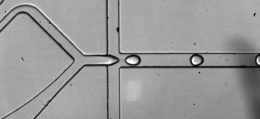
Professor Iain Clark, in partnership with graduate program faculty member Adam Abate, was able to analyze single cells harboring latent HIV using a technique that isolates single, infected cells as tiny amounts of blood move through their microfluidic devices. Their work was featured in Science news.
Read MoreTransfusing blood from an old mouse to a younger mouse causes ageing
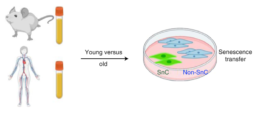
New research from the Conboy Lab, highlighted in New Scientist magazine, has demonstrated that transfusing young mice with blood from older rodents quickly triggers ageing in the young, suggesting that cellular ageing isn’t just a case of wear and tear. This is one step closer to potential anti-ageing treatments and builds on years of aging research from Professor Irina Conboy.
Read MoreDavid Schaffer: Research that takes risks must be supported
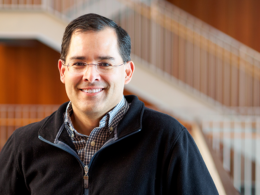
Professor David Schaffer reflects on the reasons why he sees Berkeley as a leader in world-changing research, innovation and entrepreneurship.
Read MoreHuman lung proteins can advance or thwart SARS-CoV-2 infections
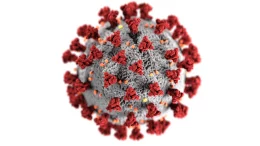
A study led by Prof Patrick Hsu has identified specific proteins within our bodies that can promote or protect us from SARS-CoV-2 infections, potentially opening the door to new antiviral therapies. Notably, they showed that mucins — the main component of mucus found in the lungs — seem to help block the SARS-CoV-2 virus from entering cells.
Read MoreStreets and Yartsev promoted to Associate Professor
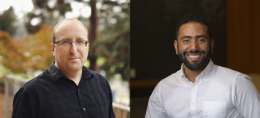
Congratulations to new Associate Professors Aaron Streets and Michael Yartsev, granted tenure effective July 1, 2022!
Read More