

Gene Editing
Recent news:
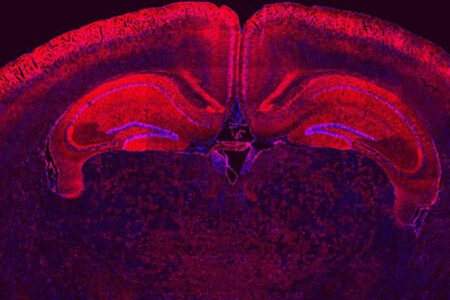
Murthy lab and UC Davis have developed a unique mRNA delivery method for in-utero gene editing for neurodevelopmental conditions.
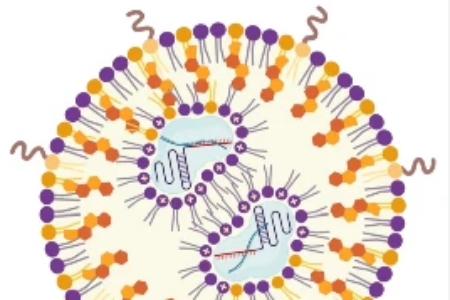
Niren Murthy et al. have developed a more stable version of the Cas9 enzyme to improve delivery of CRISPR-Cas9 ribonucleoproteins (RNPs) for in vivo gene editing.

Professor Leah Guthrie works to understand how the microbiome metabolites and proteins communicate with our human cells to influence our physiology and pathophysiology. Learn more about Guthrie in this interview with QB3.
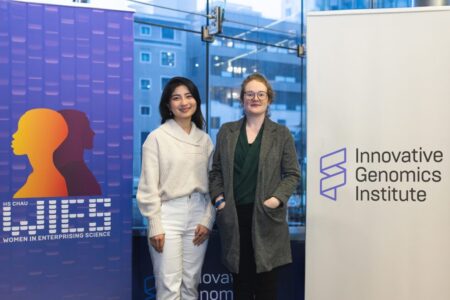
Professor Derfogail Delcassian has been awarded $1 million in non-dilutive seed funding to accelerate the commercialization of her work on targeted molecular therapies for hard-to-treat cancers.
Research by Niren Murthy’s lab presents a new acid-degradable linker that rapidly hydrolyzes in endosomes but is stable in the blood, which could significantly increase the efficiency of delivering mRNA-based therapies to cells.

Adam Arkin’s lab has developed a new technique, barcoded overexpression bacterial shotgun library sequencing (Boba-seq), that will make it much easier for researchers to discover the traits or activities encoded by genes of unknown function in microbes.

A team of researchers led by Professor Patrick Hsu has discovered the first DNA recombinase that is programmable, allowing the user to specify any desired genomic target sequence and any donor DNA molecule to be inserted. The bridge recombinase mechanism promises to expand genome editing beyond CRISPR and RNA interference (RNAi) to offer a unified mechanism for programmable DNA rearrangements. Bioengineering graduate student Nicholas Perry is also a lead author of the study, along with other researchers from the Arc Institute.
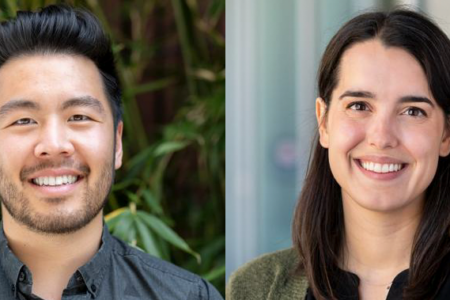
PhD alumni Connor Tsuchida and Ivana Vasic have both been named to the annual Forbes 30 Under 30 list for their achievements in Healthcare! Tsuchida has founded Crispr delivery startup Azalea Therapeutics, and Vasic is developing therapies to support the next generation of in vitro fertilization as founder of Vitra Labs.
- « Previous
- 1
- 2